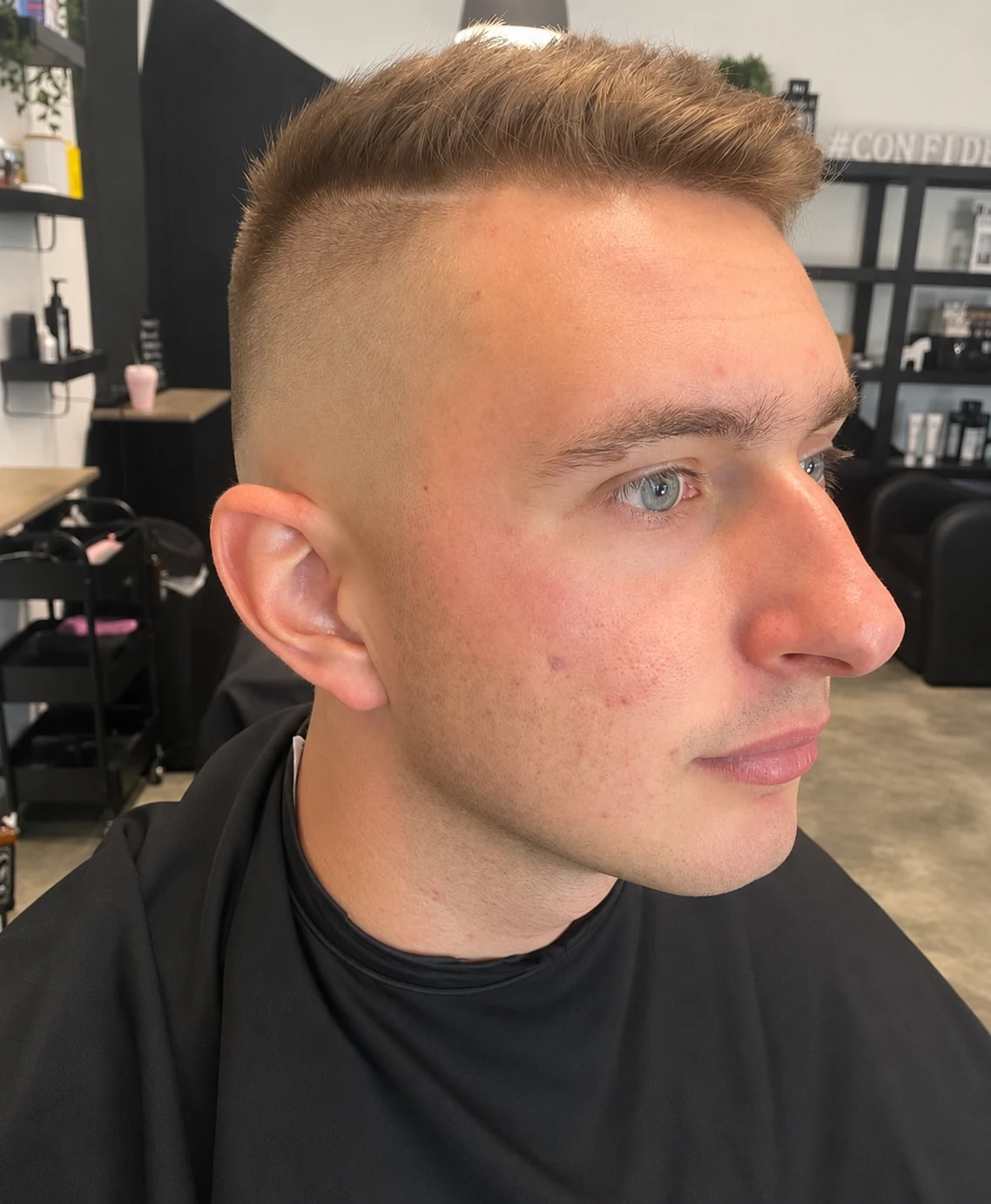
An undercut keeps the sides or back much shorter beneath a longer section. A disconnected version has a clear separation instead of a fully graduated blend. Not every haircut with short sides is a disconnected undercut.
Ask where the short section should stop and how the longer hair will sit over it. Discuss whether you want a visible disconnect or a softer connection. Think about how you wear the hair when it is not styled, including when it falls forward.
Making it work day to day
The longer section still needs its own shape and routine. Check the outline with the top down as well as swept back or tied up. Growing out a strong disconnect can take a series of shape adjustments, so mention any plans to move toward a fuller cut.
Choosing the appointment
A new undercut or a substantial change may need Re-Style. If you are maintaining an existing shape, explain which sections you want changed.
A few answers
Before your visit.
Is an undercut the same as a fade?+
No. A fade describes a graduated transition; an undercut often emphasises separation between a short area and a longer top.
What should I bring to the appointment?+
Bring a reference that shows the details you like, plus a clear note of the length you want to keep or change. Your barber can discuss the result in relation to your own hair.